Choosing and buying firewood
How long does a bag of logs last? Bag sizes, cubic metres and a winter's worth
By Carl, Northwest Firewood Company ·
How long a bag of logs lasts depends on the size of the bag, the size of your stove and how many hours you burn, so nobody can honestly give one number. What you can pin down is the volume of each bag, how many make up a cubic metre, and how much wood a typical home gets through in a winter. Put those together with a week of your own burning and you have a reliable answer.
How big each bag of logs is
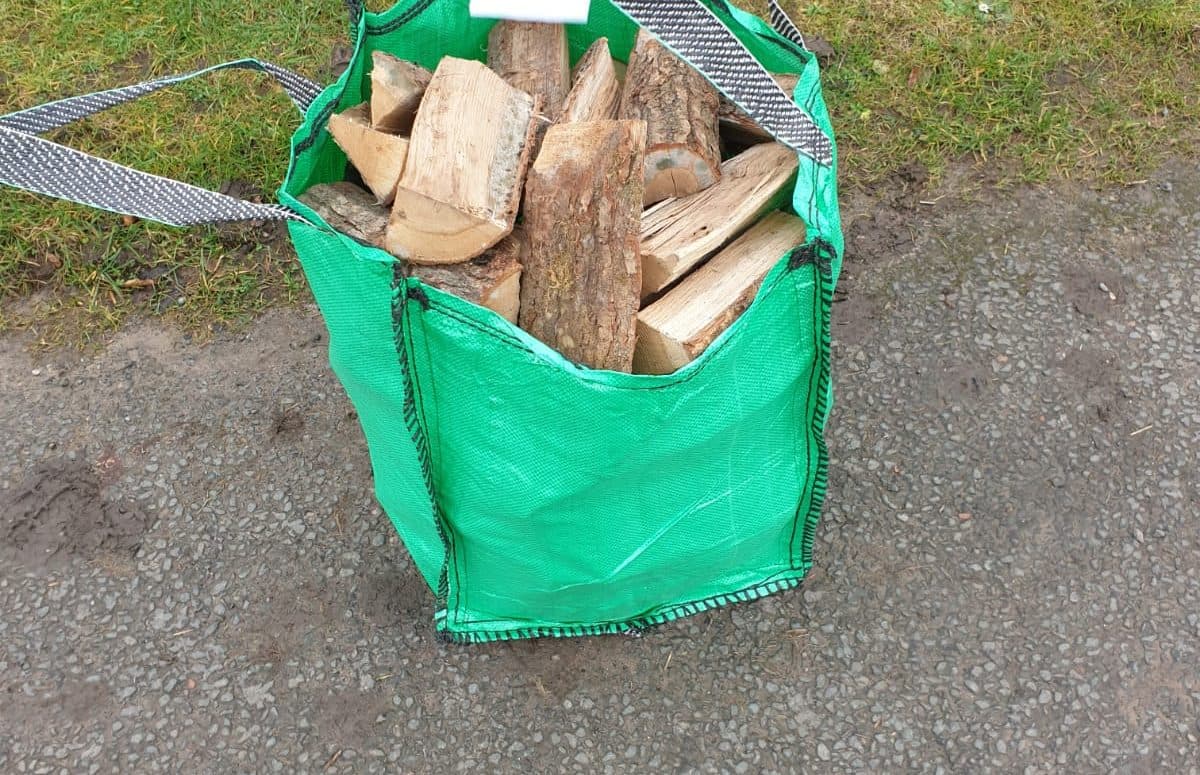
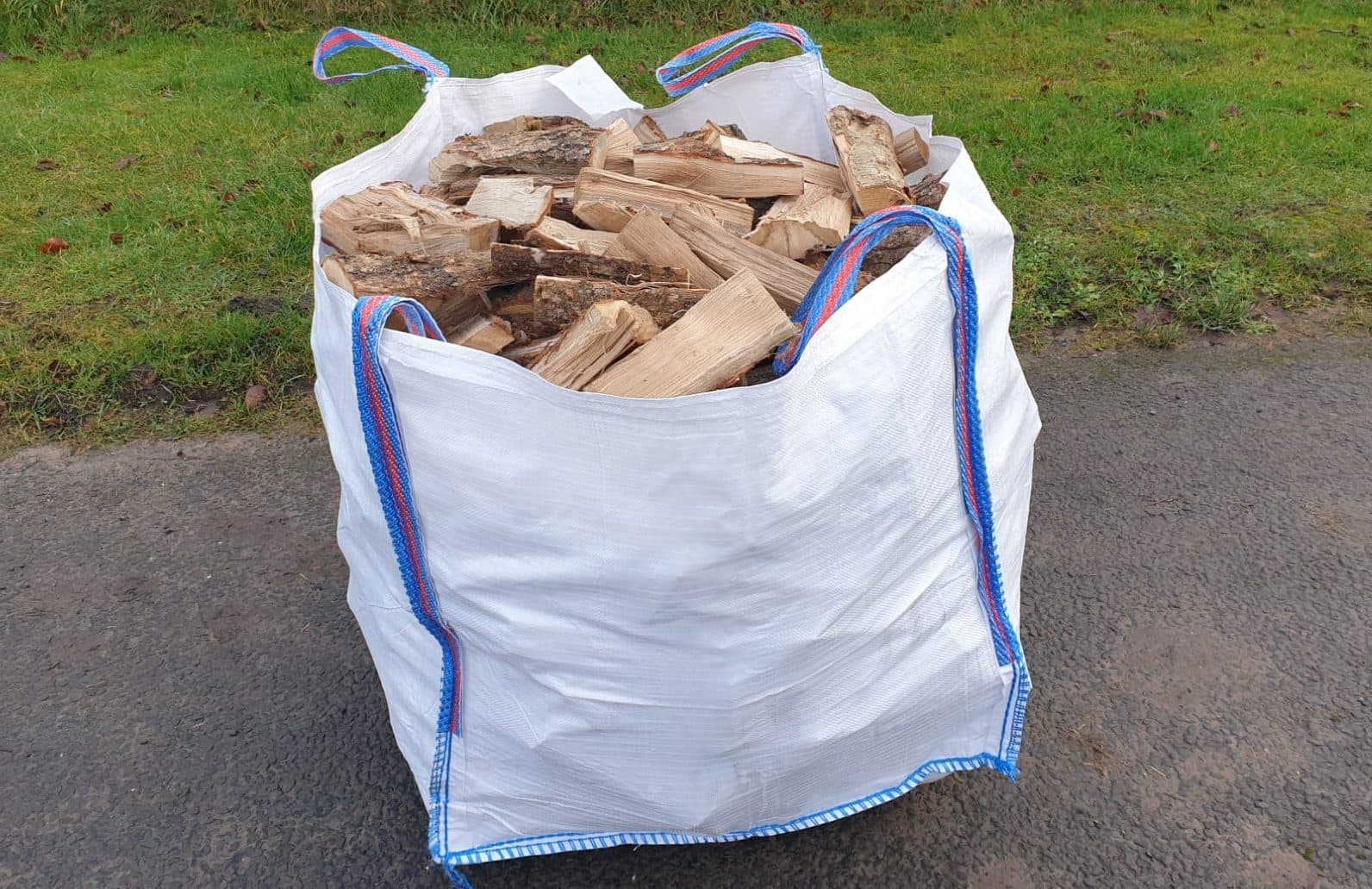
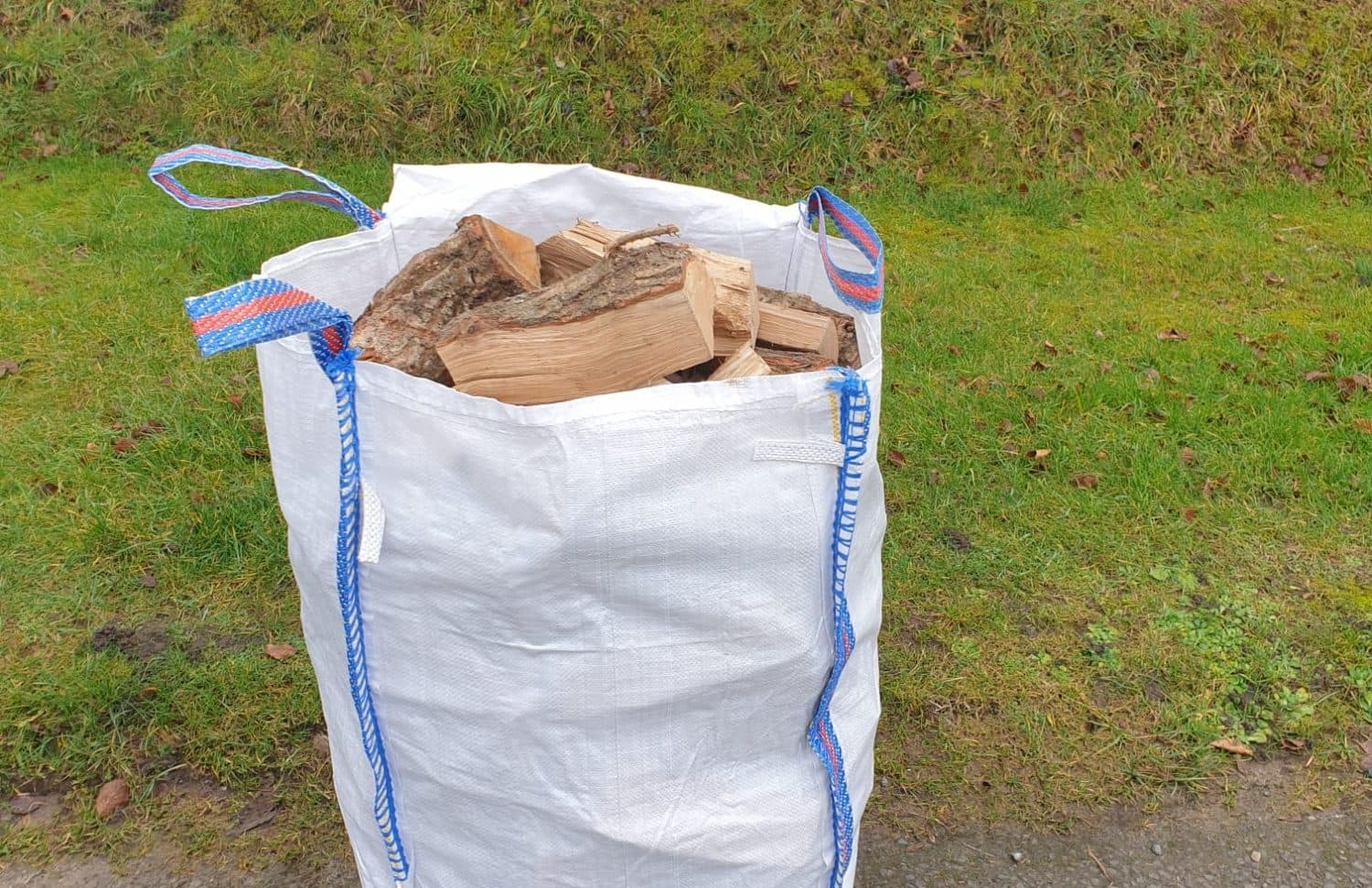
These are the outside dimensions of each bag, worked out as a volume. The logs are tipped in loose, not stacked, so this is the size of the bag rather than solid wood.
| Bag | Size | Bag volume | Price (1 bag) | Per m³ |
|---|---|---|---|---|
| Small Bag | 45 x 45 x 60cm | 0.12 m³ (122 litres) | £50.00 | £411.52 |
| Barrow Bag | 50 x 50 x 100cm | 0.25 m³ (250 litres) | £70.00 | £280.00 |
| Large Bag | 80 x 80 x 80cm | 0.51 m³ (512 litres) | £125.00 | £244.14 |
The large bag holds about four times as much as a small bag, which is why it costs so much less per cubic metre.
How many bags of logs in a cubic metre?
Dividing one cubic metre by each bag's volume gives:
| Bag | Bag volume | Bags in one cubic metre |
|---|---|---|
| Small Bag | 0.12 m³ | About 8 |
| Barrow Bag | 0.25 m³ | 4 |
| Large Bag | 0.51 m³ | About 2 |
One catch: loose logs leave more air gaps than a neat stack. HETAS points out that a bag of stacked wood contains more wood than a loose bag of the same volume. So a cubic metre of loose bags is a little less wood than a cubic metre stacked in a log store. When you compare sellers, compare like with like, and check whether a "cube" means loose or stacked.
How long does a bag of logs last in a log burner?
There is no published burn rate you can trust for a bag, because it changes so much from one home to the next. The things that make the biggest difference:
- Stove size and how hard you run it. A big stove on high eats more than a small one ticking over.
- How many hours a day you burn. An evening fire and a stove that runs from breakfast to bedtime are very different.
- Whether it is your main heat. Defra's practical guide suggests that if your stove is secondary heating, you consider burning less when the house is already warm.
- How dry the wood is. Defra says wet wood is harder to keep alight and produces less heat, so you burn more of it for the same warmth. Kiln-dried logs at 20% moisture or less go further than damp ones.
Work out your own figure
This takes a week and gives you a number for your house, which is worth more than any rule of thumb:
- Start a fresh bag on a Monday.
- Note each evening or day you light the fire.
- When the bag runs out, divide the number of fires by one bag. That is your fires per bag.
- Divide the fires you light in a normal week by that figure. That is how many bags you use a week.
For example, if a barrow bag gave you six evenings and you light the fire five evenings a week, you use a little under one barrow bag a week. Multiply by the weeks you expect to burn and you have your season.
How much wood do I need for winter?
HETAS estimates that a typical UK home using a stove on cold evenings needs somewhere between 1.5 and 3 cubic metres of seasoned hardwood for the winter. It says those figures assume wood at 20% moisture. A stove that heats the house all day will need more.
Here is what that range looks like in our bags:
| Bag | For 1.5 m³ | For 3 m³ |
|---|---|---|
| Small Bag | About 12 bags | About 25 bags |
| Barrow Bag | 6 bags | 12 bags |
| Large Bag | About 3 bags | About 6 bags |
Because our bags are filled loose, treat these as the least you would need rather than an exact count. If your own weekly figure from the method above points higher, go with yours.
The sums also show why the small bag is a top-up rather than a winter supply. A season's worth in small bags costs far more than the same wood in large bags. Buying several at once saves a little more: three large bags come to £345.00 rather than three times £125.00.
Buy it all at once or as you go?
HETAS sets out both. Buying in bulk is cheaper per cubic metre, but you need somewhere to keep it. Buying as you go costs more per log but needs no storage. It also suggests a mix: if you only have room for part of your winter's wood, top up the gap with bags during the season.
Storage is the limit for most people. HETAS warns that wood delivered at 20% moisture can be back above 25% by spring if it is stored badly. Only order what you can keep under cover. Our guide to storing logs in a small yard covers how.
If you have the space, our Small Pallet is £270.00 and is meant for stocking up for the season. If you don't have back access, read getting a pallet of logs with no back garden access first.
Common mistakes
- Comparing bags by price, not volume. A cheap bag can be a tiny bag. Work out the price per cubic metre, which the table above does for ours.
- Treating a loose cubic metre as a stacked one. Loose logs take up more room for the same amount of wood.
- Buying more than you can store dry. Defra's advice is to keep any firewood under cover and in the dry. Wood that gets wet burns faster and gives less heat, so a big order stored badly can last less time than a smaller one stored well.
- Guessing instead of counting. One week of counting fires beats any average.
Questions people ask
How long does a large bag of logs last?
It depends on your stove and how often you light it. Use the counting method above for a week to get a figure for your home. As a guide to volume, a large bag holds about half a cubic metre, so two make roughly one cubic metre loose.
How many bags of logs do I need for a winter?
Using HETAS's estimate of 1.5 to 3 cubic metres for evening use, that is roughly 3 to 6 large bags or 6 to 12 barrow bags. Treat that as a minimum, since our bags are filled loose.
Is a bulk bag the same as a cubic metre?
Not always. HETAS puts a builder's bag at roughly 0.8 to 1 cubic metre. Our Large Bag is 80 x 80 x 80cm, which is about 0.51 m³. Always check the bag dimensions, not just the name.
Do kiln-dried logs last longer?
Dry logs give more heat per log than wet ones, so you need fewer of them for the same warmth. Defra's guide says modern stoves are designed to get the most from wood at up to and including 20% moisture. See kiln-dried vs seasoned logs for more, and how to test log moisture if you are not sure how dry yours are.
Choosing your bag
All our logs are kiln-dried to 20% moisture or below. The Large Bag is the cheapest per cubic metre and suits regular burning, the Barrow Bag suits smaller stores, and the Small Bag is for the odd fire or a top-up. For more on matching size to your home, see what size of firewood do I need. Delivery is free across Merseyside, West Lancashire and the Wirral; check your town here.