Choosing and buying firewood
What moisture content should logs be? How to test with a meter
By Carl, Northwest Firewood Company ·
Logs for burning should have a moisture content of 20% or less. That is the level Defra sets for dry wood and the one modern stoves are designed around, and in England it is also the legal limit for firewood sold in units under two cubic metres. The only reliable way to check is to split a few logs and test the fresh faces with a moisture meter.
What moisture content should logs be for burning?
Defra's guide to buying firewood says most modern stoves have fireboxes and air controls designed to get the most out of wood with a moisture content of up to and including 20%. It adds that green or freshly felled logs are not suitable for a domestic stove or open fire until they have been dried to that level. HETAS, the body that registers stove installers, gives the same target: aim for 20% or lower, and check your stove manufacturer's instructions too.
The figure is the same for kiln-dried logs. Defra says kiln-dried wood should have a moisture content of 20% or less and, if stored and packaged correctly, is ready to use the day you buy it. "Seasoned" has no set standard at all, which is why a meter reading tells you more than the label. Our guide to kiln-dried vs seasoned logs explains the difference.
What the law says about moisture content
In England, the Air Quality (Domestic Solid Fuels Standards) Regulations 2020 set a "prohibited level" for firewood of a moisture content of more than 20%. The rule covers wood sold for burning in homes in England in units of less than two cubic metres.
Wood sold in those smaller units must be certified by an approved certification body and come with the certificate holder's name and certificate number. Once a certificate has been issued, the seller must not supply wood they have reason to believe is over 20%. Loads of two cubic metres or more can still be sold wet, but only with a written notice saying the wood is not suitable for burning until it has been dried.
To check a seller, look up their certificate on the Woodsure register, which you can search by business name or certification number. Woodsure is the certification body Defra appointed to run the Ready to Burn scheme.
How to test logs with a moisture meter
Defra's practical guide calls moisture meters cheap and easy to use, and HETAS says the pin meters Woodsure's auditors use cost around £20. A meter is only as good as the way you use it, so follow the method HETAS and Defra set out:
- Check the settings. If your meter has them, HETAS says to set it for the species of wood and the air temperature, and to read on a wet basis, which is the accepted measure for wood fuel. Some meters are made for building work and read on a dry basis, which gives a different number.
- Pick a random sample. Defra advises checking a random number of split logs rather than one. HETAS adds that you should take logs from the middle of the pile as well as the surface.
- Split each log. Use an axe or log splitter to open it up along its length.
- Test the fresh face straight away. HETAS says to measure in the centre of the split surface as soon as possible, because the moisture content of the exposed wood can change quickly.
- Write down every reading. Look at the highest numbers as well as the lowest. If several logs are over 20%, the batch is not ready.
- Look after the meter. HETAS says to check the pins are in good condition and the battery is not low, since either can throw the reading.
What your reading means
| Reading (wet basis) | What it means | What to do |
|---|---|---|
| 20% or less | Dry enough to burn | Burn it, and keep the rest under cover |
| Over 20% | Not ready, and above the legal limit for small units sold in England | Dry it further under cover, then test again |
| Mixed results | Some logs are drier than others | Burn the dry ones, keep drying the rest and retest |
Sources for the table: Defra seasoning guide, HETAS, the 2020 Regulations.
How to check moisture content without a meter
Defra lists a few rough signs: dry logs are lighter than wet logs of the same size and species, sound hollow when tapped, often have cracked ends and loose bark, and can be lighter in colour. Our kiln-dried vs seasoned guide goes through them. None of them gives you a number, so use them to spot obviously wet wood, not to confirm dry wood.
The fire tells you too. Defra says wet wood is difficult to light or keep alight, creates a lot of smoke and blackens the stove glass. If that sounds familiar, read why your log burner glass goes black or the room gets smoky.
What to do with wet logs
Do not burn them yet. Wet wood gives less heat and more smoke, and lets more tar and soot build up in the chimney, which raises the risk of a chimney fire. Instead:
- Stack them to dry. Defra says to stack logs off the ground on bearers, in a sunny, windy spot, under a waterproof cover with open sides, so the wind can blow through the stack.
- Split big pieces. Defra suggests splitting logs to less than 10cm across, which lets moisture move from the centre of the log to the surface more easily.
- Give it time. Defra says natural seasoning is likely to take two summers or more, and its practical guide says freshly chopped wood may need up to two years. Test again before you burn it.
- Bring rained-on logs under cover. Dry logs left out in the rain will not stay dry. Defra's advice is to keep any firewood under cover and in the dry before you burn it, so move them somewhere sheltered and test them again before use.
If you bought a large load cheaply and it turns out to be wet, check whether it came with the written notice the law requires for wet wood sold in two cubic metres or more.
Common mistakes
- Testing the outside of a log. HETAS says to test the centre of a freshly split surface, not the bark or the cut end.
- Testing one log. Defra advises a random sample, and HETAS says to include logs from the middle of the pile.
- Leaving the split face too long. The exposed wood starts to change as soon as it is opened, so test it straight away.
- Using a meter set to dry basis. HETAS notes that meters made for construction may read on a dry basis, which is not the measure used for firewood.
- Testing once and forgetting. Logs stored in the open can take on water again. Keep them under cover and retest if they have been out in bad weather.
Questions people ask
What moisture content should kiln-dried logs be?
20% or less. Defra says kiln-dried wood should be at 20% or less and ready to use on the day of purchase if stored and packaged correctly.
What is the moisture content of seasoned logs?
There is no fixed figure, because "seasoned" has no set standard. Defra says wood air-dried under cover for at least 12 months, or two summers, can reach around 20%, depending on the species, the climate and how it was stored. Test it to be sure.
Is it illegal to sell wet logs?
In England, firewood sold in units under two cubic metres must be certified and must not be over 20% moisture. Larger loads can be sold wet, but must come with a notice saying the wood needs drying before it is burned.
Do I need a moisture meter if I buy kiln-dried logs?
It is not essential, but it is cheap and useful if your logs have been stored for a while or got wet. Defra's practical guide suggests using one to check your logs before burning.
What moisture meter should I buy?
Any pin meter that reads on a wet basis and has a wood setting will do the job. HETAS notes that Woodsure's auditors use a pin meter costing around £20, so you do not need an expensive one.
Logs that pass the test
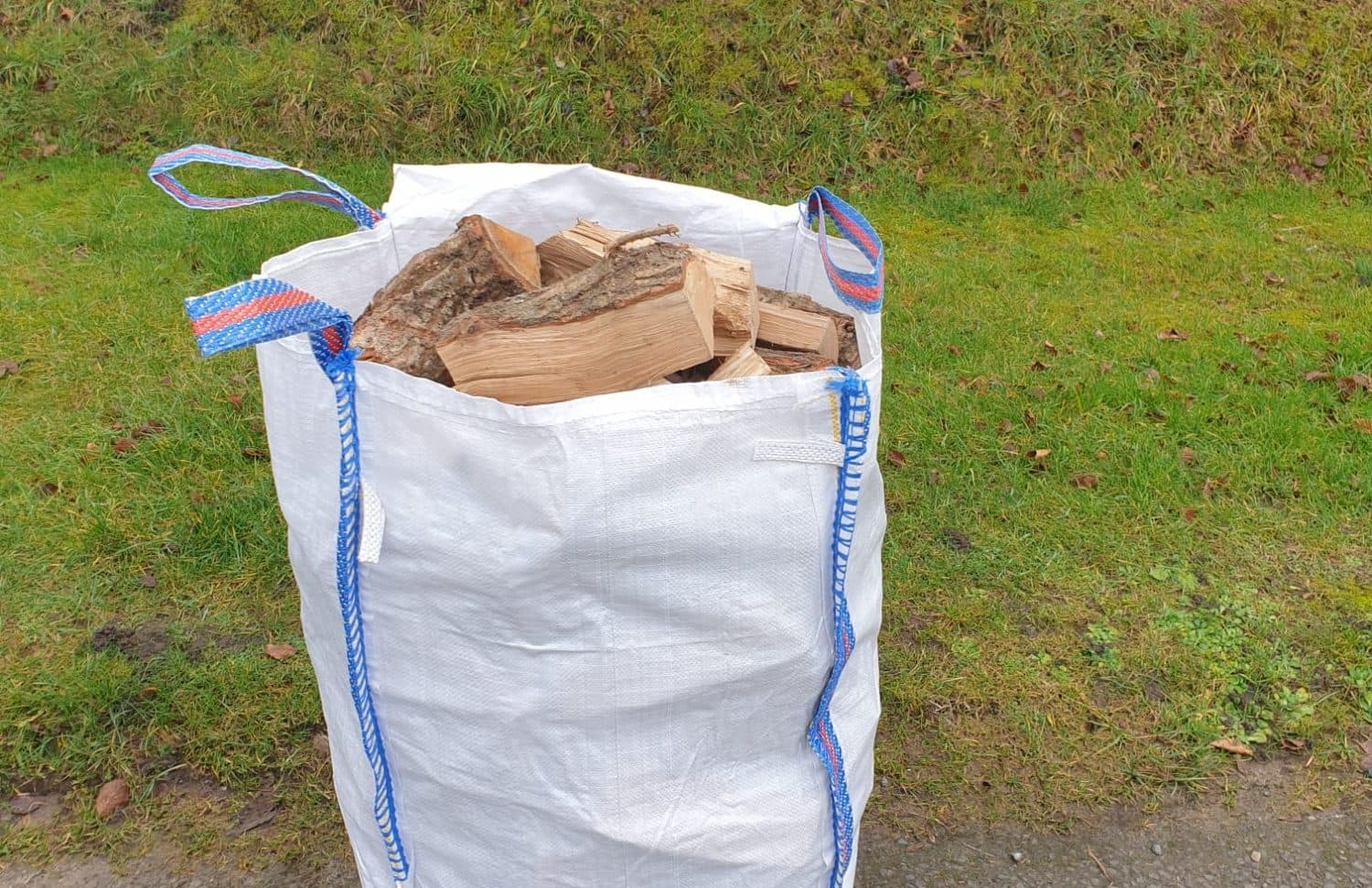
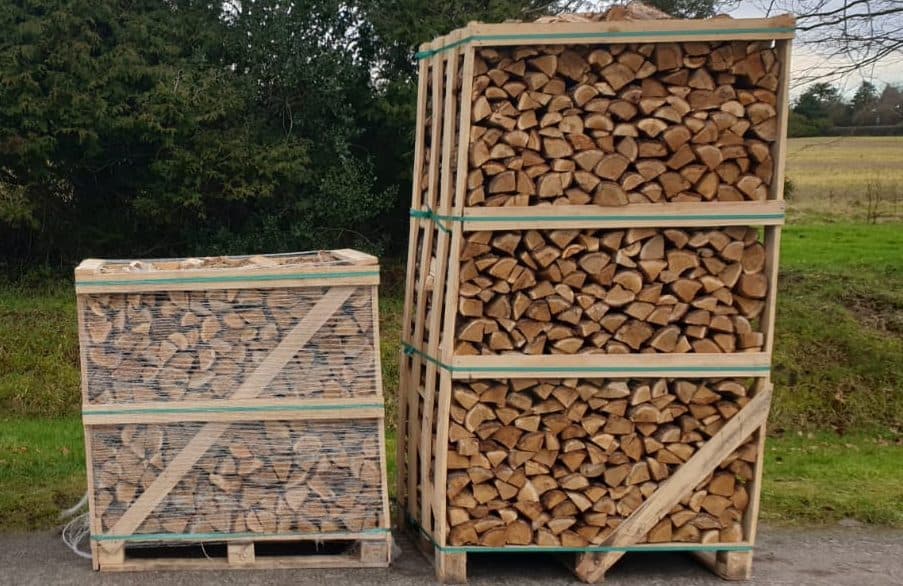
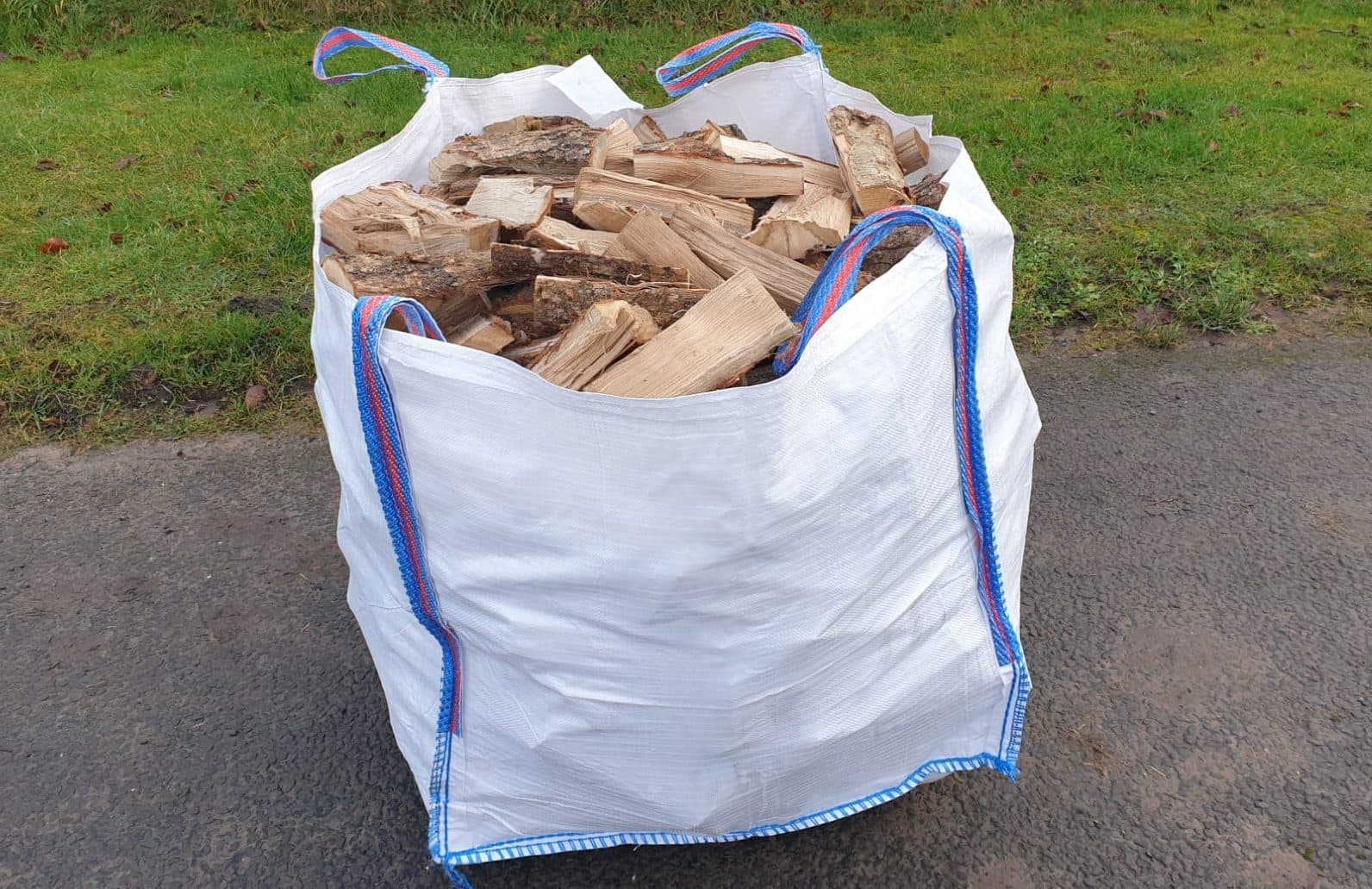
Every batch of our logs is kiln-dried and moisture-tested before it goes out, so it arrives at 20% or below. The photo on our About page shows a meter reading 8.8% on a stack of our kiln-dried logs, and you are welcome to check them yourself with the method above. A Large Bag (£125.00) or Small Pallet suits regular burning, and the Barrow Bag and Small Bag suit smaller stores. Not sure how much you need? See what size of firewood you need.
Sources
- Defra: A guide to buying, storing and seasoning wood
- Defra: Open fires and wood-burning stoves, a practical guide (October 2023)
- HETAS: How to check firewood moisture content
- Air Quality (Domestic Solid Fuels Standards) (England) Regulations 2020, regulation 3
- Air Quality (Domestic Solid Fuels Standards) (England) Regulations 2020, regulation 4
- Air Quality (Domestic Solid Fuels Standards) (England) Regulations 2020, regulation 8
- Woodsure: Find a supplier