Smoke control and the rules
Do I need a carbon monoxide alarm with a log burner?
By Carl, Northwest Firewood Company ·
Yes, you should have a carbon monoxide alarm in the same room as your log burner, and in two situations the law in England requires one. If a new or replacement stove is fitted, building regulations guidance says a carbon monoxide alarm should be provided in the room. If you rent, your landlord must fit one in any room with a fixed combustion appliance other than a gas cooker, which includes a wood burner. For an existing stove in a home you own, neither rule applies, but the NHS, the fire service and Defra all say to fit one anyway.
This is general information about the rules in England, not legal advice.
Do you need a carbon monoxide alarm with a log burner? The short answer
| Your situation | Is an alarm required? | Where the rule comes from |
|---|---|---|
| You own your home and the stove is already fitted | Not by these rules, but strongly advised | NHS, Merseyside Fire and Rescue |
| A new or replacement stove is being installed | Yes, in the same room | Approved Document J |
| You rent your home | Yes, the landlord must provide it | Smoke and Carbon Monoxide Alarm (England) Regulations 2015, as amended in 2022 |
If you own your home and already have a stove
The building regulations rule applies when a stove is installed, so it does not reach back to a stove that was fitted years ago. That is not a reason to go without. The NHS says to get a carbon monoxide alarm for each room of your home containing appliances that burn gas, oil, coal or wood. Merseyside Fire and Rescue Service gives the same advice: install a CO alarm in all rooms with fuel-burning heating that does not run off electricity. Defra's guide to stoves and open fires also tells you to install a carbon monoxide monitor.
Carbon monoxide has no colour and no smell, so you cannot tell if it is around you. An alarm is the only way to know.
If a new or replacement stove is being fitted
Building regulations in England have required carbon monoxide alarms for new solid fuel installations since the 2010 edition of Approved Document J, and the 2022 amendments extended the guidance to gas and oil appliances. For wood burners and other solid fuel appliances, the current document says:
- When: where a new or replacement fixed solid fuel appliance is installed in a home, a carbon monoxide alarm should be provided in the room where the appliance is.
- Which alarm: one that complies with BS EN 50291-1:2018, powered by a battery designed to last the working life of the alarm, with a warning when that working life is about to run out. A hard-wired mains alarm (Type A, not a plug-in) is allowed instead if it has a sensor failure warning.
- Where: in the same room as the stove, either on the ceiling at least 300mm from any wall, or on a wall as high as possible (above any doors and windows) but not within 150mm of the ceiling. It should be between 1m and 3m horizontally from the stove.
The same document notes that an alarm should not be regarded as a substitute for correct installation and regular servicing. If you are having a stove fitted, ask your installer to confirm the alarm is part of the job.
If you rent your home
Landlords in England have had to fit a carbon monoxide alarm in rooms with a solid fuel appliance since the Smoke and Carbon Monoxide Alarm (England) Regulations 2015. The 2022 amendment widened this to any fixed combustion appliance other than a gas cooker, and from 1 October 2022 landlords must repair or replace an alarm once they are told it is not working.
Under the current regulations, the landlord must:
- make sure a carbon monoxide alarm is in any room used as living accommodation that has a fixed combustion appliance, other than a gas cooker
- check the alarms are working on the day a new tenancy begins
- repair or replace a faulty alarm as soon as reasonably practicable after it is reported
GOV.UK's guidance confirms the rules apply to all homes rented by private landlords or registered providers of social housing, unless the tenancy is one of the excluded types.
Councils enforce the rules. If a landlord breaches the duty after being served a remedial notice, the council can charge a penalty that must not exceed £5,000.
If you are a tenant with a log burner and no alarm, tell your landlord in writing. Once it is fitted, testing it is usually down to you. GOV.UK says testing does not require specialist skills, and that you should report it to your landlord if it still does not work after changing the batteries.
Where to put a carbon monoxide alarm with a log burner
- In the same room as the stove. Every source quoted here puts an alarm in the room with the appliance.
- Between 1m and 3m from the stove. This is the distance in both Approved Document J and GOV.UK's landlord guidance.
- Height: for a new installation, Approved Document J says on the ceiling or high on a wall, as above. GOV.UK's guidance for landlords says that in general an alarm should go at head height, on a wall or shelf. The advice differs, so follow the instructions for your alarm.
- Away from damp and direct sunlight. Warwickshire Fire and Rescue Service advises avoiding high humidity or direct sunlight, which can affect how the alarm works.
- More alarms if you can. Merseyside Fire and Rescue suggests an alarm in the hallway or sleeping area as well.
Look for BS EN 50291 on the packaging, and buy from a reputable shop. A smoke alarm is not a carbon monoxide alarm: Warwickshire Fire and Rescue says the two are not a substitute for one another and you need both.
How to test it
Warwickshire Fire and Rescue Service advises:
- test it at least once a month with the test button, following the maker's instructions
- replace batteries at least once a year, or as the manufacturer recommends
- keep it free of dust
- replace the whole alarm when the manufacturer says, usually every 5 to 7 years, because the sensors lose sensitivity over time
Alarms that meet the building regulations guidance have a warning built in for when their working life is running out. If yours starts chirping, check the instructions to see whether it is a low battery or the end-of-life warning.
Symptoms of carbon monoxide poisoning
The NHS lists these symptoms of carbon monoxide poisoning:
- a headache
- dizziness
- feeling sick or being sick
- feeling weak
- tiredness and confusion
- chest and muscle pain
- shortness of breath
- your face turning hot and red
- loss of vision
The NHS says symptoms may come and go, and they may get worse when you spend time in an affected room and better when you go outside. If you feel ill in the room with the stove and better out of it, take that seriously.
What to do if the alarm goes off
Merseyside Fire and Rescue Service's advice is to turn all appliances off and leave your home immediately, go to A&E and tell them you may have been poisoned by carbon monoxide. Ventilate the house well when you go back, and do not use the stove again until it has been inspected.
The NHS says to call 111 if you think you have symptoms, and to call 999 or go to A&E if someone has been exposed and is finding it hard to breathe, has suddenly become confused, has lost consciousness, feels weak, or has chest or muscle pain. Do not drive yourself to A&E.
Before you light the stove again, get the chimney and stove checked. A blocked or dirty flue is a common reason fumes come back into the room, which is why HETAS says chimneys burning wood should be swept at least twice a year. Our guide to how often to sweep your chimney has a checklist for the sweep's visit.
Common mistakes
- Fitting the alarm in the hallway only. The first one belongs in the room with the stove.
- Relying on a smoke alarm. It will not detect carbon monoxide.
- Never pressing the test button. Test it monthly.
- Keeping an alarm past its working life. Replace it when the end-of-life warning sounds or the manufacturer's date passes.
- Assuming dry wood or a new stove means no risk. Good fuel and a modern stove help, but a blocked flue can still push fumes back into the room.
- Ignoring symptoms that ease when you go outside. That pattern is one the NHS specifically mentions.
Questions people ask
Do I need a carbon monoxide alarm if I don't have gas?
Yes, if you have a log burner, open fire or any other appliance that burns fuel. Wood produces carbon monoxide too. Warwickshire Fire and Rescue says that if you have a fuel-burning boiler, fire or stove, you should have an alarm in every room where fuel is burned. Homes powered only by electricity do not need one.
Does a carbon monoxide alarm for a log burner need to be hard-wired?
No. For a new installation, Approved Document J allows either a sealed battery alarm designed to last its full working life or a hard-wired mains alarm with a sensor failure warning. It specifically rules out plug-in mains alarms.
My carbon monoxide alarm goes off when I light the log burner. What should I do?
Treat it as real. Follow the steps above: turn the stove off as far as you can, get everyone out, and get medical advice if anyone feels unwell. Do not use the stove again until a sweep or installer has checked it. Smoke coming back into the room while lighting is a sign the chimney needs attention. See why log burner glass goes black or smoky for the usual causes.
Is a carbon monoxide alarm a legal requirement for homeowners?
Only when a new or replacement stove is installed. For an existing stove in a home you own, the rules described here do not require one, but every safety body we have quoted recommends it.
Does the law apply in Scotland and Wales?
This guide covers England, where we deliver. Scotland and Wales have their own rules.
Safe burning starts with the fuel
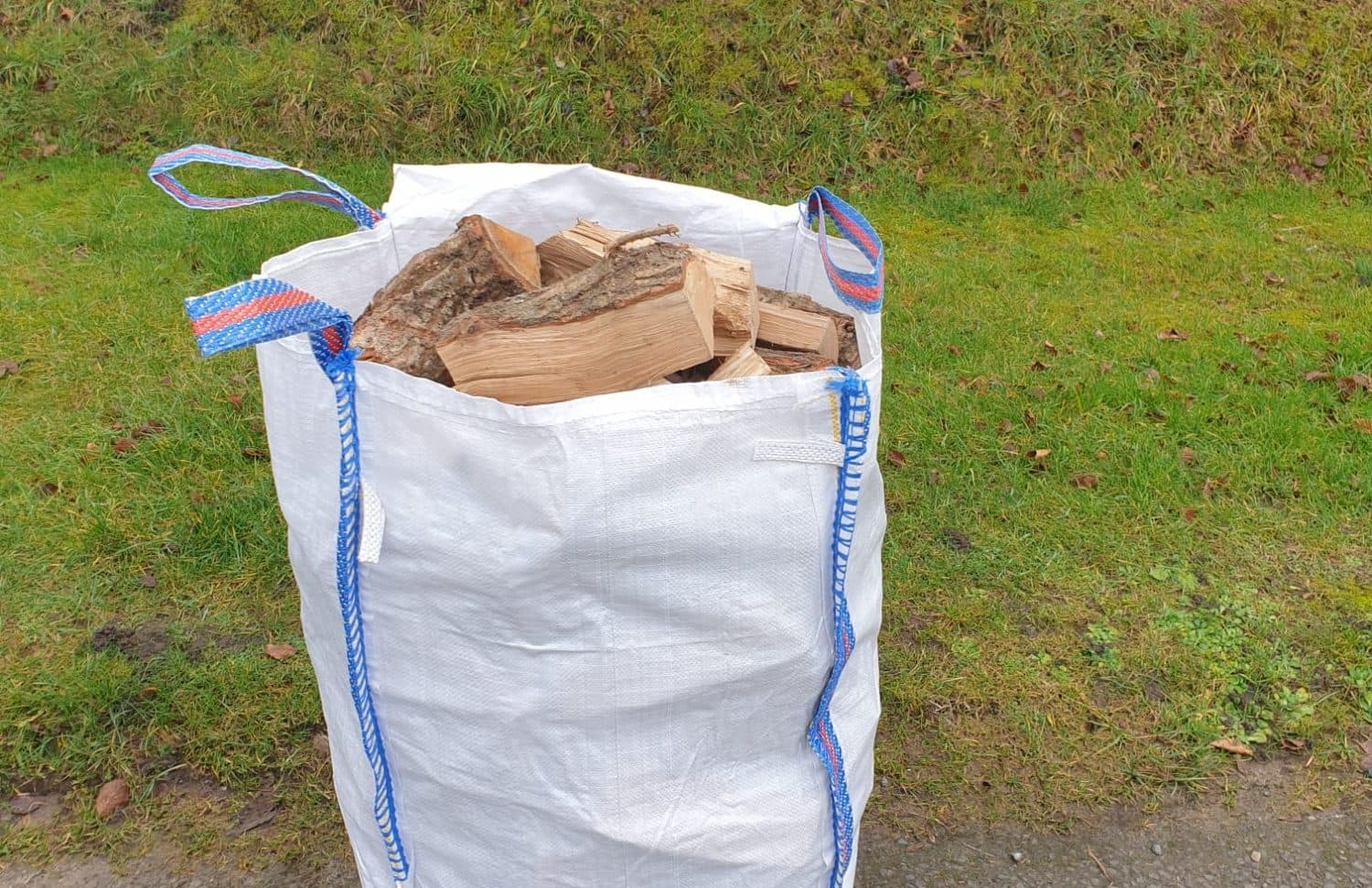
An alarm warns you of a problem. It does not stop one. The other half is burning dry wood in a well-swept stove: Defra says wet wood creates smoke and harmful particulates and can damage your stove and chimney. Every batch of our logs is kiln-dried and moisture-tested to 20% or below. Our Large Bag suits regular use, and if you live in a smoke control area, check our smoke control guide for what you can burn. For lighting with less smoke, see how to light a log burner.
Sources
- Approved Document J: Combustion appliances and fuel storage systems (2010 edition incorporating 2010, 2013 and 2022 amendments)
- Smoke and Carbon Monoxide Alarm (England) Regulations 2015, regulation 4
- Smoke and Carbon Monoxide Alarm (Amendment) Regulations 2022, regulation 5
- Smoke and Carbon Monoxide Alarm (England) Regulations 2015, regulation 8 (penalty)
- GOV.UK: Smoke and Carbon Monoxide Alarm (Amendment) Regulations 2022, guidance for landlords and tenants
- NHS: Carbon monoxide poisoning
- Merseyside Fire and Rescue Service: Carbon monoxide
- Warwickshire Fire and Rescue Service: Carbon monoxide (CO) alarms
- Defra: Open fires and wood-burning stoves, a practical guide (October 2023)
- HETAS: When should my chimney be swept?